Reduce Appointment No‑Shows: Playbook for South African Service SMEs
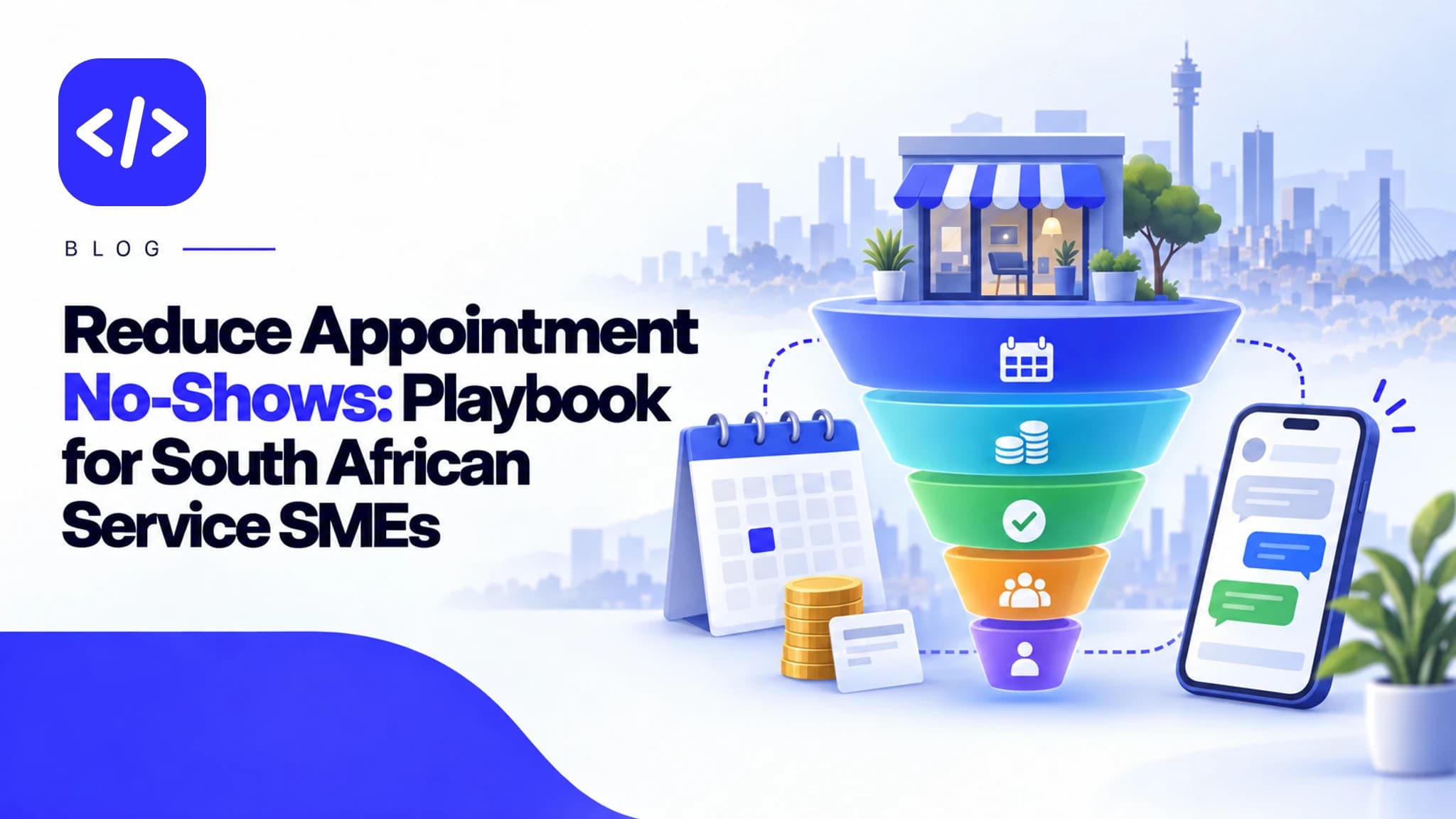
A small, refundable online deposit plus two timed confirmations (booking + day‑before), an automated waitlist and reconciled payments—sent with POPIA‑logged consent—gives South African salons, clinics and appointment businesses a practical way to cut no‑shows, lift booking→attendance conversion and increase revenue per available slot. Below is an evidence‑backed, actionable 30/60/90 pilot you can run with existing booking, payments and messaging channels.
Quick summary: expected wins and required systems
- Expected wins: single reminder messages have produced ~10–13 percentage‑point boosts in short‑term attendance in South African clinical trials, and multi‑component programs (reminders + operational changes) have driven much larger, sustained drops in no‑shows across practice networks PLOS One SMS trial and multi‑practice program evaluations. Operations research also supports modest pre‑charging as often more profitable than naive overbooking when tuned correctly pre‑charging analysis.
- Minimum systems: booking calendar with slot locking and webhook events; online payments able to capture refundable holds or deposits; messaging layer (WhatsApp Business API where uptake allows, SMS fallback); an automation engine to send confirmations, day‑before reminders, trigger waitlist offers and reconcile payment status. Map these into a single solution so bookings, messages and payments share the same contact and appointment context—this is the connected approach we use at Luminum for bookings, automations and reconciled records Luminum solutions.
The four levers that move the needle
Each lever works alone; combined they compound results.
1. Modest, refundable online deposit
Why it works: a small monetary commitment reduces casual “maybes” without permanently penalising customers. Evidence and modelling show pre‑charging often beats overbooking when demand and elasticity are measured and deposits are applied to final bills pre‑charging analysis.
How to set it:
- Pilot parameter to test: start with a modest fixed amount or percentage that fits the service value, then A/B test customer completion and cancellation behaviour before setting a permanent policy.
- Rules that preserve trust: apply the deposit to the final invoice; refund when customers cancel with reasonable notice (e.g., >24 hours); keep a clear, small admin fee only for late cancellations with explicit examples. Display terms prominently at booking and in the confirmation message.
Operational note: track deposit capture rate and refund rate as primary signals of friction.
2. Two timed confirmations: booking and day-before
Structure:
- Immediate booking confirmation (include payment receipt if deposit taken).
- Single day‑before reminder timed to local behaviour (typically 18–24 hours before). Trials show a single well‑timed SMS can meaningfully increase attendance in the short run PLOS One SMS trial.
Channel and interaction: - WhatsApp interactive messages perform well where smartphone/WhatsApp access is high; otherwise use SMS for inclusivity. Always log consent at booking.
- Make the day‑before message one‑tap: Confirm / Reschedule / Cancel. Include appointment time, location, deposit credit balance and a friendly late‑policy note.
Example day‑before copy (short): “Hi [Name], your appointment is tomorrow at [time]. Tap Confirm to hold, Reschedule, or Cancel. Your R[xx] deposit will be credited to the bill. Reply STOP to opt out.”
3. Clear cancellation policy surfaced early
- Show deposit and refund rules on the booking UI, in email/WhatsApp confirmations and in the day‑before reminder. Transparent terms reduce disputes and perceived unfairness.
- For regulated health services, ensure your rules align with professional guidance and include clinical exceptions; document exceptions in the appointment record.
4. Automated waitlist and refill flow
- Make waitlist opt‑in at booking. When a slot frees, notify the next‑in‑line with a one‑tap offer and short hold window (e.g., 10 minutes) to accept and pay (or confirm if deposit already taken).
- This converts idle inventory quickly and increases revenue per available slot; automation removes manual staff work.
Practical takeaway

Technology stack and how to wire it
Minimal reliable components
- Booking UI + calendar with slot locking and webhook events (booked, cancelled, attended).
- Payments that can hold/settle deposits (card and Instant EFT) and attach reconciled payment records to appointments.
- Messaging: WhatsApp Business API for interactive confirms; SMS gateway as fallback. Log POPIA consent at booking.
- Automation engine: triggers for payment missing, reminders, waitlist offers and reconciliation alerts.
- Reporting: automatic matching of payments to appointments with flags for unreconciled transactions.
How this maps to Luminum
We connect the public booking experience to billing, messaging and reconciled records so front‑desk workflows and your ledger share one context. Read how this maps to bookings, automations and reconciled billing on our platform pages Luminum solutions and our engagement approach Luminum pricing.
Measurement plan: what to track
KPI definitions to track daily and review weekly
- No‑show rate = (no‑shows ÷ booked appointments) × 100. Program evaluations suggest combined levers can produce a 40–60% relative reduction over 90 days; use your baseline for precise targets program evaluation.
- Booking→attendance conversion = (attended ÷ bookings) × 100.
- Deposit capture rate = (bookings with deposit ÷ bookings requiring deposit) × 100. Set the target from your baseline and treat any proposed threshold as a pilot hypothesis.
- RevPAS (Revenue per Available Slot) = (gross revenue from attended slots ÷ total available slots). Compare baseline 30 days vs pilot periods.
Hypothetical ROI sketch
- Baseline: 25% no‑show on 400 monthly booked slots → 100 no‑shows. Average revenue per attended slot R200.
- Recover 50% of no‑shows (50 appointments) → R10,000 incremental revenue before fees. Messaging and payment fees are small relative to recovered revenue; pilot to confirm net benefit.
POPIA, consent and consumer trust
- Capture and store explicit opt‑in for WhatsApp/SMS at booking; log channel and timestamp.
- Show deposit and refund terms before payment; attach receipts and refund proofs to appointment records.
- For health services, check professional guidance about fees and refunds; document clinical exceptions.
- Keep messaging opt‑out handling simple: “Reply STOP” or an unsubscribe link and update the appointment contact record immediately.
A practical 30/60/90 pilot
Days 0–7: decisions and setup
- Choose a modest deposit level to test, define the refund window and cancellation rules, then update the booking UI and consent fields before testing payment capture.
Days 8–30: small pilot
- Turn on deposit + immediate confirmations for a controlled cohort. Monitor deposit capture rate, complaints and timing of cancellations.
Days 31–60: add reminders and a waitlist
- Enable day‑before reminder channel and automated waitlist refill. Track no‑show rate, deposit capture, RevPAS.
Days 61–90: refine and report
- Adjust deposit levels, copy and refund windows where complaints appear. Produce a before/after KPI report and decide whether to scale permanently.
Short message templates
- Booking confirmation: “Hi [Name], your [service] appointment is booked for [date/time]. A refundable R[xx] deposit has been held and will be applied to your bill. Tap [link] to reschedule or cancel.”
- Day‑before reminder: “Reminder: your appointment is tomorrow at [time]. Tap Confirm / Reschedule / Cancel. Deposit R[xx] credited to final bill.”
- Waitlist offer: “Slot free at [time]. Tap Accept to hold the slot for 10 minutes. Payment will finalise your booking.”
Common pitfalls and how to avoid them
- Overcharging deposits: start low and test elasticity; visible crediting to the final bill avoids perceived gouging industry guidance.
- One‑channel dependence: use WhatsApp where uptake is high, but keep SMS fallback for inclusivity.
- No reconciliation: link payments to appointment records to avoid staff time reconciling transactions.
- Poor consent logging: losing POPIA consent records creates disputes—log everything.
Next actions
- Run a 30‑day pilot with 25% of online bookings: set deposit, enable booking confirmations and capture consent; measure deposit capture rate and no‑show changes.
- If you already have a booking system, wire a webhook to your payment provider and messaging gateway and test the day‑before interactive message with a small customer cohort.
- For an integrated pilot (bookings → WhatsApp/SMS → payments → reconciled records), map requirements to a connected implementation—see how bookings, automations and reconciled billing fit together with our platform Luminum solutions.

