How we plan a conversion-focused website at Luminum

In this article
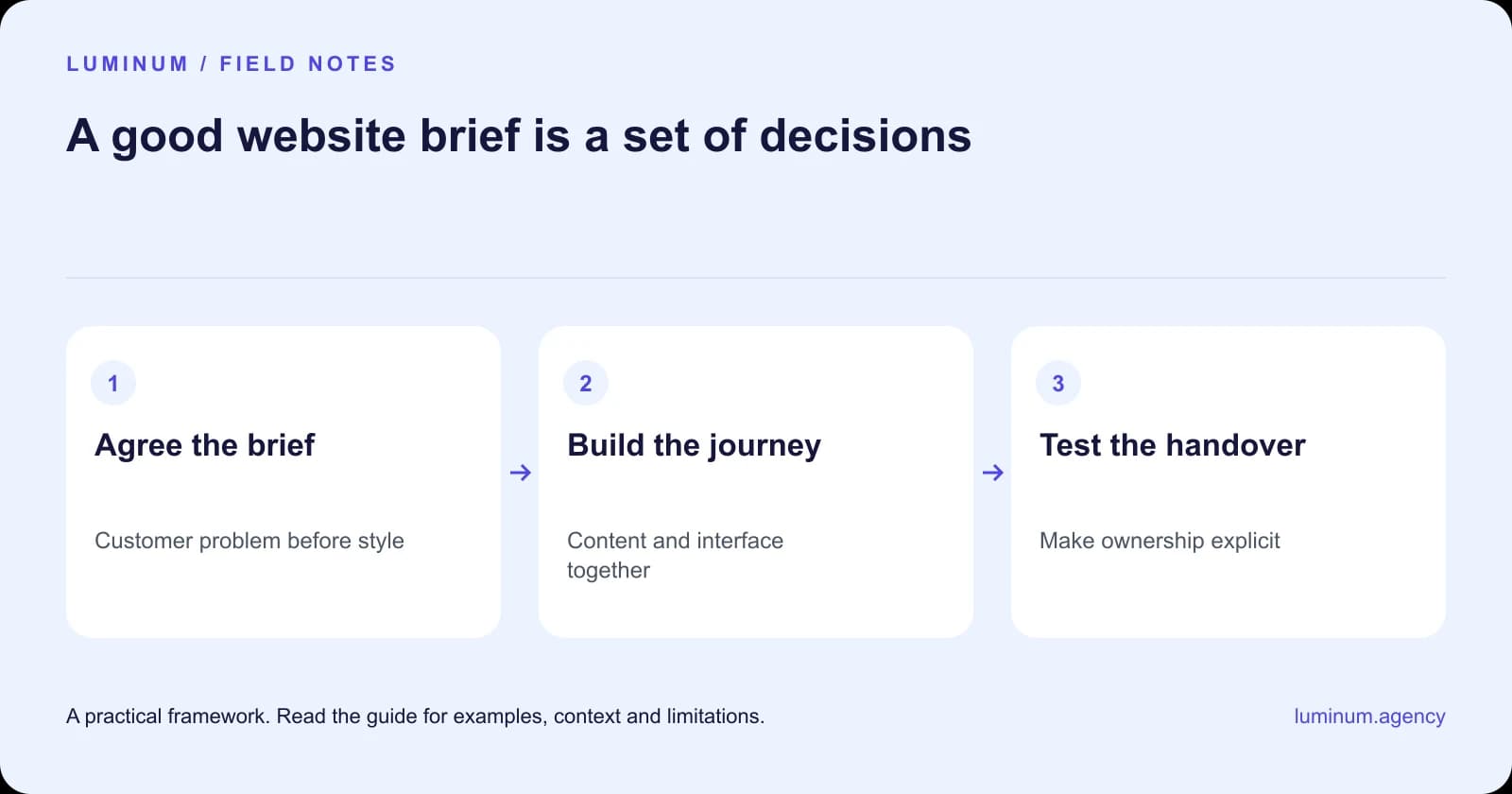
A website project should begin with a customer problem, not a choice of animation. At Luminum, the useful conversation is about what visitors need to understand, what action the business can support and how both sides will know the site works.
What “conversion-focused” means here
A conversion is a meaningful action, such as a genuine enquiry, booking or purchase. It is not automatically a sale. The website's role is to make the next appropriate step clear and dependable, while the offer and the business still need to deliver.
We do not treat a particular layout, framework or visual style as a guarantee of results. The project scope should state the work being delivered and how it will be tested, rather than promise a universal uplift.
Turn the initial conversation into a usable brief
Describe the audience, the core offer, the areas served and the questions that delay a decision. Identify existing content worth keeping and the person who can approve facts. Agree the primary customer journey and any operational constraints.
For an illustrative installation business, the brief might prioritise service suitability, real project examples, coverage and an assessment request. For a retailer, it may prioritise product selection, delivery information and checkout. Those should not become the same generic site with a different logo.
Decide what belongs in the first release
Separate essentials from later ideas. A reliable service page and working enquiry route can be more valuable at launch than a complex feature nobody has time to maintain. Keep the backlog, but do not let it obscure the initial purpose.
Confirm who supplies copy, photography, product information and legal text. If additional content, integrations or migration work are needed, include them explicitly in the proposal. This article describes planning principles, not a universal package entitlement.
| Compare | Agree before work starts | Check before handover |
|---|---|---|
| Purpose | Primary audience and customer action | The journey is clear |
| Scope | Pages, features and exclusions | Agreed deliverables are present |
| Content | Owners and approval process | Claims and details are verified |
| Operation | Response, maintenance and support roles | Real tests reach the right people |
Make content and design work together
Write the important answers before polishing the layout. Use comparison tables for real choices, diagrams for processes and images that provide context or evidence. Keep the page readable when decorative effects are absent.
Existing websites need a preservation plan. Valuable URLs, content and customer routes should not disappear simply because the new navigation is shorter. Include redirects and launch checks where the project changes them.
Test what the business will depend on
Walk through the site on mobile, check keyboard interaction and submit test enquiries. Confirm that notifications and records reach the correct people. If payments or bookings are involved, test failure and retry cases as well as success.
Record the acceptance criteria and unresolved limitations. A launch should be a checked handover, not a surprise link sent at the end of the project.

Plan the work after launch
Agree who maintains the site, handles incidents and updates content. Review meaningful enquiries and customer feedback once there is enough information to learn from. Changes should respond to evidence rather than a habit of redesigning every few months.
If you want to discuss a project, bring the current site, the main customer problem and the constraints you already know. A clear problem is a better starting point than a request to copy somebody else's homepage.
Related reading
- A professional business website: the anatomy of a useful service page
- How much does a website cost in Pretoria? Compare the whole commitment
Substantively updated in October 2026. Examples identified as illustrative are not client results.

