Why WordPress Websites Fail for Small Businesses
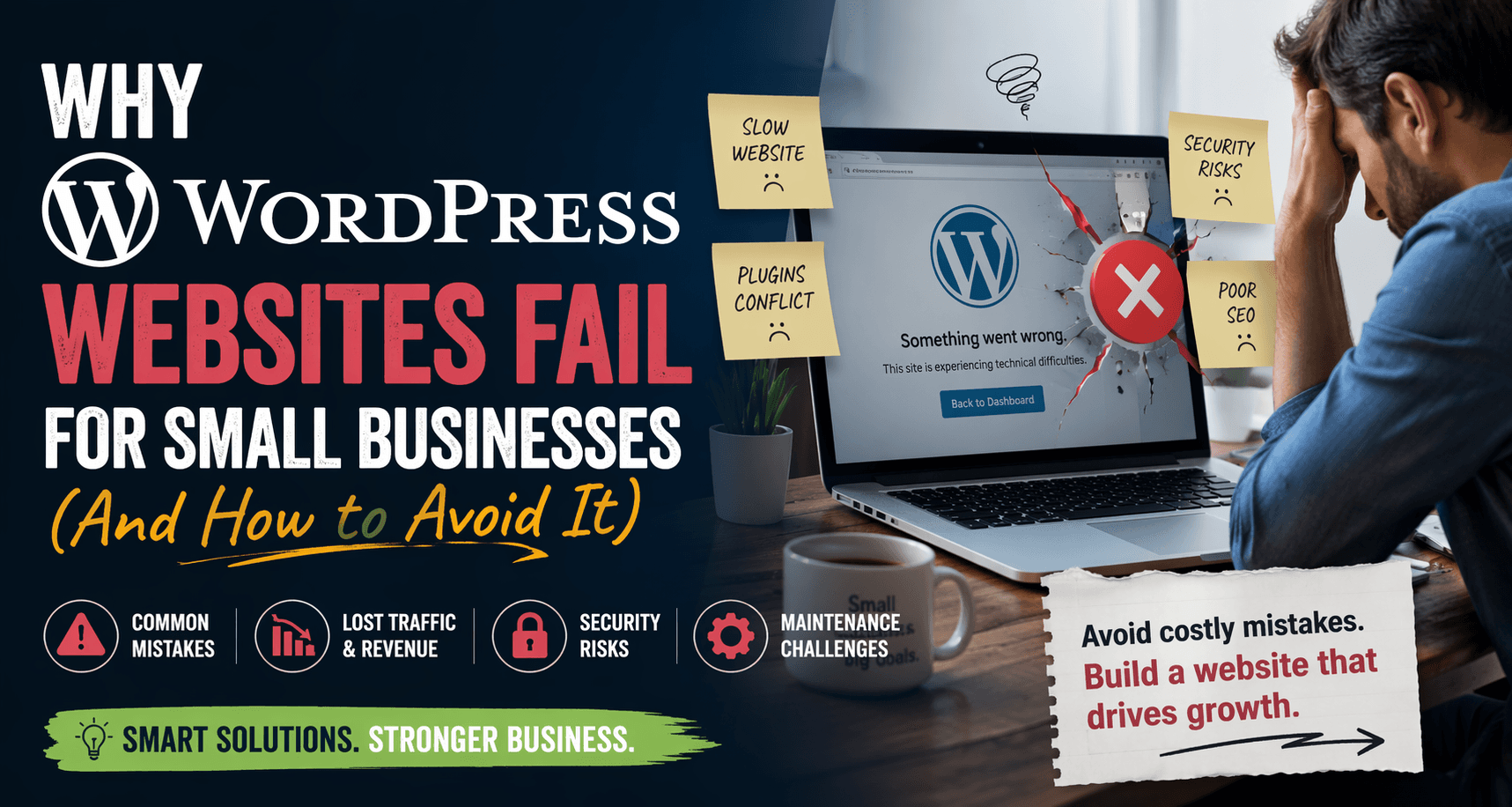
Why WordPress Websites Fail for Small Businesses (And How to Avoid It)
WordPress powers a huge portion of the internet — and for good reason. It’s flexible, widely supported, and can be extremely powerful when used correctly.
But here’s the reality: most WordPress websites for small businesses fail.
Not because WordPress is bad — but because it is often used incorrectly, without strategy, or without understanding how to turn a website into a lead-generating system.

The Real Problem: It’s Not WordPress
Most small business owners think the platform is the issue.
It’s not.
The real problem is:
Poor setup
No strategy
Cheap or rushed development
Lack of SEO structure
No focus on conversions
1. DIY Builds With No Strategy
One of the biggest reasons WordPress websites fail is the “DIY approach”.
Business owners often:
Install a theme
Add some pages
Write basic content
…and expect results.
But without:
Clear messaging
SEO structure
Conversion flow
…the website does nothing.
2. Slow Website Performance
WordPress sites often become slow due to:
Too many plugins
Poor-quality hosting
Large, unoptimised images
Bloated themes
Slow websites:
Rank lower on Google
Lose visitors quickly
Reduce conversions

3. Poor SEO Setup
Many WordPress websites are launched with:
No keyword targeting
No metadata optimisation
No proper page structure
No internal linking
Without SEO, your website is invisible.
4. No Conversion Strategy
This is the biggest mistake.
Most WordPress websites:
Look decent
Have information
But don’t guide users to take action
A high-performing website needs:
Clear call-to-actions
Structured layout
Lead capture forms
Trust signals
5. Overuse of Plugins
Plugins are powerful — but overusing them causes problems.
Common issues include:
Slower performance
Security vulnerabilities
Conflicts between plugins
Maintenance complexity
Many small business websites rely on too many plugins instead of proper development.
6. Poor Mobile Experience
A large portion of South African users browse on mobile devices.
Many WordPress sites fail because:
Themes are not properly responsive
Layouts break on smaller screens
Text becomes hard to read
Buttons are difficult to click
This directly impacts both SEO and conversions.
7. No Ongoing Maintenance
WordPress requires regular updates.
Without maintenance:
Plugins break
Security risks increase
Performance drops
Features stop working
Many small businesses launch a website — and then ignore it completely.
What a Successful WordPress Website Looks Like
A properly built WordPress website should:
Load fast
Be mobile-friendly
Be SEO-optimised
Have clear messaging
Convert visitors into leads
When done correctly, WordPress becomes a powerful business tool.
How to Avoid These Mistakes
To make WordPress work for your business:
Focus on strategy before design
Use minimal, high-quality plugins
Optimise for speed and mobile
Structure your website for SEO
Build clear conversion paths
Final Thoughts
WordPress websites don’t fail because of the platform — they fail because of how they are built.
If your website is:
Slow
Not generating leads
Hard to use
Not ranking on Google
…then the issue is not WordPress — it’s the execution.

